Hikvision IDS-TCV900-BI(F)/1140/H1(AF) 9 MP AI License Plate Camera
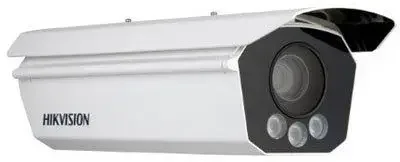


Custom-built ANPR camera for professional license plate recognition and traffic monitoring
- Can capture license plates across up to 2–3 lanes simultaneously
- Can recognise license plates across countries
- Can recognise vehicle type (passenger car, van, lorry, bus, motorcycle etc.)
- Can recognise vehicle color in daylight (e.g. red, blue, black, white, grey etc.)
- Can recognise vehicle manufacturer (e.g. Toyota, VW, BMW, Mercedes, Kia etc.)
- Can determine driving direction and automatically detect “wrong way”
- Can read license plates at high speed – up to approx. 250 km/h
- Detects vehicles without license plates
- Can capture motorcycle plates in supported scenarios
- Detects violations such as crossing a solid line and illegal lane changes
- Can detect mobile phone use while driving (with flash lighting)
- Detects missing seatbelt (with flash lighting)
- Detects stationary vehicles, obstacles or dropped objects on the road
- Can monitor tunnel traffic – e.g. queues, stops, pedestrians, roadworks etc.
- Can combine data (plate + type + color + manufacturer + direction) in a single alert
- Can work with radar, loops, barrier systems and other external triggers
- Option to store images and metadata directly on an SD card if the network goes down
- Can integrate with professional backend systems for traffic monitoring and fine handling
This camera is one of Hikvision’s most advanced ANPR units and is developed specifically for locations where very precise and reliable vehicle registration is required. The camera uses a large, light-sensitive sensor that ensures even fast, dark or low-resolution plates are registered correctly. It’s a solution typically used on motorways, toll plazas, tunnels, border crossings and larger surveillance projects where operational stability and accuracy are critical.
| Datablad |
9 MP IR ANPR Checkpoint Capture Unit
- High quality imaging with 9 MP resolution (1”GMOS)
- Excellent low-light performance, Color: 0.001 Lux@(F1.4, AGC ON), 0.0005 Lux with IR
- Efficient H.265 compression technology
- 3D DNR technology delivers clean and sharp images
- Support license plate recognition (LPR)
- Vehicle feature recognition: vehicle type / color / manufacturer / license plate color recognition, no-plate vehicle capture
- Violation behaviors detection: driving on lane line, Illegal lane change, wrong-way driving detection, seatbelt and phone call detection.
- Application Scenarios: highway, tunnel, toll station, urban road, etc.
There is no reviews yet. Be the first to write us your opinion
Den professionelle måde at levere strøm, til et PoE-kamera, er gennem netværkskablet.
På den måde behøver man kun at trække et enkelt kabel til hvert kamera - og skal ikke døje med 230V og små strømforsyninger.
Strømmen til kameraet leveres gennem netværkskablet fra enten...
- en optager med indbygget PoE, også kaldet NVR. Et typisk valg for installationer op til og med 8 kameraer.
- en PoE-switch. Populært fortalt en fordelerdåse til netværkskabler. Det typiske valg på store installationer eller hvis man ønsker fleksibel kabelføring.
- en PoE-injector. Kan kun levere strøm til et kamera.
Af samme grund følger der ikke strømforsyning med PoE-kameraer. Du kan bestille en klassisk strømforsyning her, hvis du ikke ønsker at benytte PoE.
Here’s a license plate camera that can do everything in traffic monitoring
IDS-TCV900-BI is a purpose-built ANPR camera for professional license plate recognition and traffic surveillance. It features a 9 MP high-speed camera and a dedicated deep learning engine, so it doesn’t just read plates — it can also identify vehicle type, color, manufacturer, driving direction and a wide range of traffic violations such as crossing a solid line, illegal lane changes, driving the wrong way, mobile phone use and missing seatbelts.
The unit is designed for motorways, tunnels, toll plazas and advanced urban and traffic projects where high precision and documentation at high speeds are required.
Specialized ANPR camera – not a “regular” surveillance camera
This is not a standard IP camera with some extra ANPR software. The whole unit is built as:
- Dedicated capture unit for license plates and vehicles
- With an internal deep learning processor
- Optimized shutter configuration, lens and IR interaction
- Robust IP66 housing with heater, designed for poles, tunnel ceilings, portals and mast mounting
That makes a big difference for stability, detection speed and accuracy, especially on motorways and in complex traffic situations.
Capture license plates across 2–3 lanes
The camera is developed to read plates across wide road sections. That means a single unit can cover two or three lanes depending on model, setup and distance. This reduces the need for multiple cameras and makes installation both cheaper and neater. For places with heavy traffic – like toll plazas, tunnels and major urban approaches – this feature provides a huge practical advantage.
License plate recognition (LPR/ANPR)
- The core of the unit is the ANPR function:
- Dedicated license plate engine in the camera
Under recommended conditions:
- Capture rate > 98 %
- LPR accuracy > 98 %
Also supports:
- Vehicles without plates (no-plate detection)
- Motorcycle plates in specific scenarios
Support for license plates from many countries worldwide
The system includes a very extensive database of formats from large parts of the world. That means the camera can read European standard plates, special plates, Arabic characters, American formats, Asian variants and many more. It therefore works perfectly in border areas, international transport hubs and countries with many foreign vehicles. The camera can also automatically identify which country a plate belongs to, depending on region and setup.
Vehicle type recognition
The camera not only reads the plate – it also analyses the vehicle. The system can recognise whether it’s a passenger car, van, bus, lorry, motorcycle, tractor or other categories. This is often used for access control where, for example, heavy vehicles are not permitted, or in surveillance projects where traffic filtering by vehicle type is needed.
Vehicle color recognition in daylight
The camera can analyse the vehicle’s body color and distinguish between many different shades. The feature provides extra metadata for searches, so you can filter for “red car without plate” or “black SUV driving the wrong way.” Color recognition works mainly in daylight where color rendering is most accurate.
Vehicle manufacturer recognition
The system can identify a very large range of manufacturers – from common brands like Volkswagen, Toyota, Ford and Kia to more specialised makes like Porsche, Land Rover, Lexus and Iveco. This adds another dimension to surveillance, especially in investigations where you want to search large datasets for a specific model or brand.
Detection of vehicle direction
The camera can automatically detect which way a vehicle is travelling and whether it’s going in the correct direction. If a vehicle is driving against traffic, an alarm is triggered. This is especially relevant in tunnels, on motorway ramps or on one-way streets where the wrong direction can be very dangerous. The function works fully automatically and requires no extra sensors.
License plate reading at speeds up to 250 km/h
The camera can detect and read plates even when vehicles pass at up to approx. 250 km/h. This is essential on motorways and in countries with high speed limits. The fast shutter and high frame rate freeze the plate sharply so accuracy doesn’t drop – even in rain, darkness or road spray.
Detects vehicles with and without license plates
If a vehicle is missing a plate, or it’s covered, crooked, damaged or unreadable, the camera still registers the vehicle and can flag it as “no plate.” This is an important security function where vehicles without plates may be suspicious or unlawful.
Support for motorcycle plates
The camera can read motorcycle plates in regions where this is enabled. Motorcycle plates are smaller and often harder to capture, but the camera is optimised for this and can handle angles, distances and small plates with high accuracy.
Detection of crossing a solid line or illegal lane changes
The system can automatically detect vehicles that cross a solid line or change lanes illegally when used with correct lighting setup. The function is commonly used in traffic monitoring and in automated fine systems on city streets and motorway networks.
Detection of mobile phone use while driving
With proper lighting the camera can detect whether the driver is using a mobile phone at the wheel. This is used especially in countries with a strong focus on traffic safety and automated enforcement. The camera captures both movements and hand positions so the system can identify phone use.
Detection of missing seatbelt
The system can detect whether the driver (and sometimes the passenger) is not wearing a seatbelt. This function requires flash lighting to ensure a clear image of the cabin. It’s used mainly in advanced control systems and in countries with automatic fine issuance.
Detection of stationary vehicles and dropped objects
The camera monitors the roadway and can detect when a vehicle stops illegally or when objects are lying on the carriageway. It helps authorities quickly spot hazardous situations like lost cargo or a vehicle that has stopped in a tunnel.
Advanced tunnel monitoring
The camera is designed for tunnel use and can detect incidents such as queues, pedestrians, stopped vehicles, roadworks or other conditions affecting safety. The system operates without extra sensors and is made for environments where reaction time must be fast and precise.
Combining metadata for precise alerts
The camera combines all recorded information – plate, color, manufacturer, type and direction – into a single data record. That means you can create very specific alerts like “Black BMW without plate driving against traffic.” It delivers an extremely detailed level of surveillance.
Integration with radar, induction loops, barriers and external triggers
The camera can work together with external systems like radar speed detectors, detector loops, traffic lights, barriers and checkpoint systems. That makes it possible to build fully automated traffic and access systems that react to precise events.
Built-in ANPR engine with deep learning
All analysis is performed inside the camera itself. That means plates, vehicle attributes and events are processed locally, without the need for an external server. This makes the system faster, more stable and cheaper to operate while significantly improving accuracy.
Built-in SD card for local storage during network failure
If the network goes down, the camera continues to store both images and metadata locally, and synchronises them automatically when the connection returns. This ensures no data is lost – even in systems with high traffic volumes.
Compatibility with professional traffic systems
The camera can be integrated directly with platforms like iVMS-8600, HikCentral and a number of third-party systems. It’s typically used in professional monitoring centres and automated fine or access systems where data must be handled, archived and analysed continuously.
Built-in SD card for local storage during network failure
If the network fails, the camera continues to store both images and metadata locally on the SD card. Data is synchronised automatically to the system when the connection returns.
The camera inside the unit
Inside the housing sits a dedicated 9 MP camera module (iDS-TCV900-BI) with:
- 9 MP 1" GMOS sensor
- Max. resolution 4096 × 2160
- Up to 25 fps at max resolution
- Color sensitivity down to 0.001 lux (F1.4, AGC ON), 0.0005 lux with IR
- Shutter from 50 μs to 20,000 μs (very important for sharp plates at high speed)
- 2D/3D DNR, WDR under 100 dB
- SNR approx. 60 dB
IDS-TCV900-BI(F)/1140/H1(AF) uses the 9 MP camera with a fixed 25 mm CS-mount lens, optimized for a specific distance and lane setup.
Lens and field of view
The unit is available in different lens variants, but for the TCV900 series there are, among others:
- 11–40 mm varifocal CS lens
- 25 mm lens (as in your model)
Typically F1.4/F1.6, designed to:
- Create controlled depth of field across one or more lanes
- Ensure sharp plates using short exposure times (fast shutter)
The field of view (for 11–40/25 mm lenses) is sized to cover 2–3 lanes depending on mounting and distance.
IR lighting and night capture
The capture unit is designed to work with external IR strobe/flash/solid light:
- IR range up to approx. 27–30 m (depending on variant)
- 850 nm IR wavelength
- Professional shutter control so plate and vehicle are frozen sharply – even at high speed
Benefits include:
- Sharp plates at night, even at very high speed
- Minimal motion blur, because very short shutter times are used together with strong lighting
Power and power connection
The camera can be powered either with classic 12 V power or via PoE (802.3at). That gives flexibility in installation so it can be set up both where there is a fixed power outlet and in traffic-technical installations where PoE power distribution is often used in cabinets. The relatively high power consumption is due to the advanced functions, the large sensor and any external flash lights the camera must work with. With a maximum power of up to approx. 30 W you must ensure the power supply is properly sized and that the installation is stable, especially in exposed locations like motorways and tunnels where operational reliability is crucial. The camera also includes a built-in heater that automatically activates at low temperatures so the optics stay free of dew, frost and condensation – without extra equipment.
IP protection and weather resistance
The camera is IP66 rated, which means it is completely dust-tight and protected against heavy rain, wind and moisture. It is designed to sit outdoors year-round without problems and is therefore ideal for roads, tunnels and open environments with rapidly changing weather. The construction is made of aluminium, providing both robustness and good heat dissipation, and the model also has moderate corrosion protection (NEMA 4X). This means the camera tolerates humid environments, coastal salt content and normal road pollution without damage. The combination of a sealed enclosure, heater and corrosion protection ensures the camera operates stably in frost, rain, heat and exposed traffic environments.
ONVIF support and system integration
The camera follows ONVIF standards (including Profile S and Profile G), making it compatible with a wide range of professional NVR systems and third-party solutions. That means you’re not locked into a single platform but can freely integrate the camera into existing VMS systems, access control, traffic platforms and backend solutions. In addition, the camera supports Hikvision’s own protocols like ISAPI, which gives access to advanced data such as license plate recognition, vehicle metadata and event logic. The system can also be connected to radar, induction loops, traffic lights and external sensors via the many I/O ports and RS-485 connections. This provides a flexible, professional solution that can be expanded and adapted for large traffic projects or complex surveillance environments.
Accessories
The camera is supplied without mounts. You can find mounts under 'accessories'
Den professionelle måde at levere strøm, til et PoE-kamera, er gennem netværkskablet.
På den måde behøver man kun at trække et enkelt kabel til hvert kamera - og skal ikke døje med 230V og små strømforsyninger.
Strømmen til kameraet leveres gennem netværkskablet fra enten...
- en optager med indbygget PoE, også kaldet NVR. Et typisk valg for installationer op til og med 8 kameraer.
- en PoE-switch. Populært fortalt en fordelerdåse til netværkskabler. Det typiske valg på store installationer eller hvis man ønsker fleksibel kabelføring.
- en PoE-injector. Kan kun levere strøm til et kamera.
Af samme grund følger der ikke strømforsyning med PoE-kameraer. Du kan bestille en klassisk strømforsyning her, hvis du ikke ønsker at benytte PoE.