Uniview 4MP ANPG license plate camera with Wiegand 8-32mm
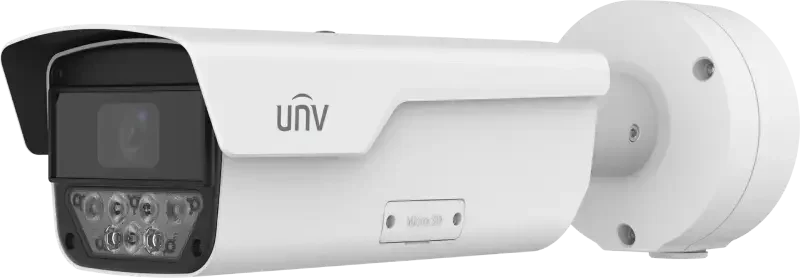
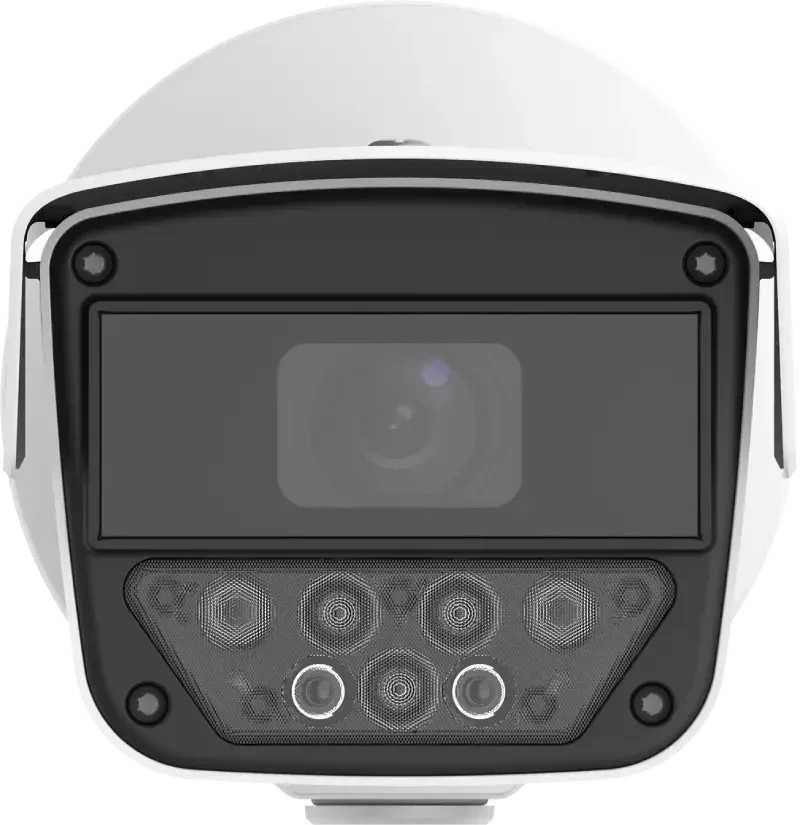
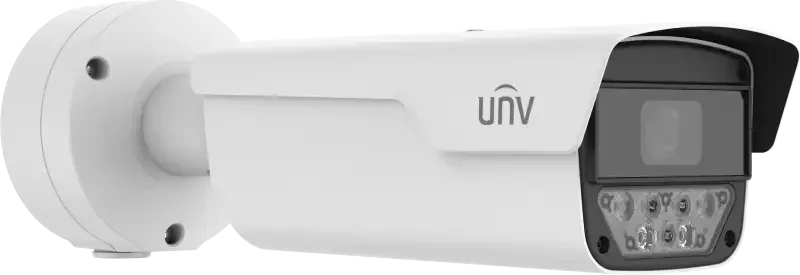
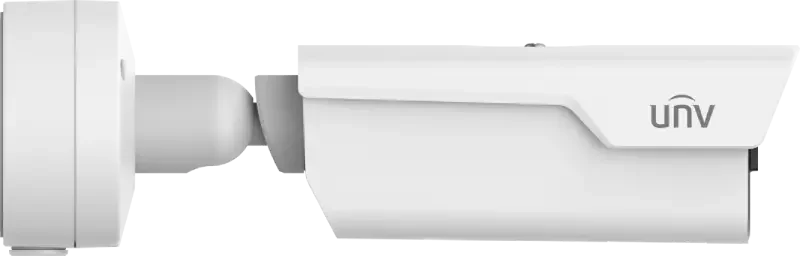


Perfect ANPG camera for gate control, parking garages, access control and much more
- 4MP camera with 8–32mm zoom for license plate recognition
- The camera has a built-in relay for controlling gates, traffic lights, etc.
- Open gate for approved plates, for non-blacklisted plates, for unknown plates, etc.
- Option for manual opening via APP or system
- Choose IR for discreet night lighting or white light for color on vehicles at night
- Supports license plate recognition in many countries including Denmark
- PoE, outdoor, SD card, alarm in/out, microphone input, speaker output
- Advanced vehicle analysis with type, color and brand
- Works really well with an IQ recorder from Uniview
- Supports Wiegand
Read more about all the camera's features in the full description below or call a technician at 70701009
The all-in-one license plate camera
This camera is perfect for all kinds of tasks that require efficient license plate capture while also allowing automatic responses to specific vehicles.
Most cameras fail when reading plates at night because they simply produce a white bar over the plate. Uniview's ANPG camera is specifically designed to avoid that, so you get stable and usable reads both day and night.
The updated model also features improved image processing and can record at up to 60 frames per second, giving more accurate reads—especially when cars are moving faster.
Should I choose 2.8-12mm or 8-32mm?
Which lens you should choose depends on the distance to the point where the plate will be read. Here are approximate distances:
- If the distance is about 3–10 meters, choose 2.8–12mm.
- If the distance is about 10–50 meters, choose 8–32mm.
These distances are indicative, so it's a good idea not to operate right at the extremes.
White light or IR?
Besides choosing the lens, you can pick between IR or white light. The light turns on automatically when it gets dark.
- IR provides a discreet solution where the plate is read very accurately, but the rest of the image will be dark
- White light gives color on the vehicle and surroundings, but the light is strong and visible
Your choice depends on whether you want discreet surveillance or more visual details.
Control gates, boom barriers, traffic lights, etc.
The camera has a built-in relay, which makes it possible to control various installations directly from the camera.
- gates
- boom barriers
- traffic lights
- bollards
- barriers
- alarms
- other systems via API
It can be connected directly to the equipment or via a recorder, where you can also control other devices in the system.
Responses to license plates
The camera can work with different types of license plates and react differently depending on what you want.
- Approved license plates
- Blacklisted license plates
- Unknown license plates
- All vehicles
Reactions can, for example, be:
- Activation of the relay
- Notification to your phone
- Email with an image
- Start of recording
The system can handle very large lists of up to 20,000 license plates, making it suitable for both small and large installations.
Advanced vehicle analysis
Besides plates, the camera can also identify vehicle type, color and in many cases the brand.
This lets you search recordings more precisely and find specific incidents faster. For example, a black van, a red passenger car or specific vehicle types.
That makes the system more flexible if you work with surveillance, analysis or documentation.
Today the price of license plate cameras is so accessible that they can be used in many types of installations. The camera contains the necessary analysis itself, so you can get started without extra software.
You only need power and an SD card, but it can of course also be connected to a recorder.
When a car passes an area, the plate is automatically read and saved in a database. You can then search all registrations and find exactly what you're looking for.
Integration with access control (Wiegand)
The camera supports Wiegand output, which makes it possible to integrate it directly with access control systems.
This means the camera can not only read license plates but also function as part of an access system. When a plate is recognized, the camera can send the signal on to an access controller, which then opens a gate or barrier.
It's typically used in installations like businesses, housing associations and parking facilities, where the license plate acts as an “access card”.
The advantage is that you can combine surveillance and access control in one solution without extra hardware.
Speed and correct placement
The camera is designed to read plates on vehicles up to about 80 km/h. That makes it suitable for driveways, parking areas and regular roads.
To achieve the best reads, correct installation is crucial. The camera's angle, height and distance to the vehicle greatly affect accuracy.
As a rule of thumb, the camera should be mounted so it points as directly as possible at the license plate, and at an appropriate distance for the chosen lens.
Can be used standalone or with a recorder
The camera can operate completely standalone with an SD card, where both images and license plate data are stored directly in the camera.
You can also connect it to a recorder to get a combined overview, easy searching and the ability to control multiple cameras in the same system.
This gives flexibility for both small and larger installations.
Searching plates and events
All read license plates are stored in a database where you can easily search for specific vehicles.
For example, you can search for a particular plate and quickly find all events where the car was registered.
That makes the camera suitable for documentation, control and subsequent analysis.
Integration with other systems
The camera can be integrated with other systems via API, which allows you to connect it with, for example, access control, parking systems or other solutions.
In practice, this means license plates are not only recorded but can also be used actively in other systems. For example, a plate could automatically grant access, register parking time or be used to control external functions.
It can also be connected to external databases where plates can be compared with existing data. This can be relevant in solutions with guest access, subscriptions or vehicle checks.
Integration typically requires setup by an installer or developer, but in return you get a very flexible solution where the camera becomes an active part of a larger system and not just surveillance.
Key technical points
- 4MP resolution (2688 × 1520)
- Motorized zoom 8 to 32 mm
- Up to 60 fps for more precise reading
- Built-in license plate recognition
- Supports multiple countries including Europe
- Whitelist and blacklist up to 20,000 license plates
- Recognition of vehicle type, color and brand
- Built-in relay for gate control
- 2 alarm inputs and 2 relay outputs
- Supports Wiegand output
- IR or white light up to 50 meters
- MicroSD up to 512 GB
- IP67 and IK10 rated
- PoE supported
- Operating temperature down to -40 °C